 OpenArt
On June 22 a YouTube tutorial with 953 views used the phrase “vibe directing” for OpenArt’s new Director mode. By August 17, 34 posts in our OpenArt sample had said it out loud. Five of them were TikToks that landed on that single day, from accounts that post about almost nothing else.
The word was written by the brand, handed to creators, and repeated on a schedule. That is the most visible thing OpenArt does with creators. It is not the most effective.
This piece is about how one product became six different videos, how the word got planted, which tier of creators actually produced the hits, and why the accounts that recited the word most faithfully got the least for it. By the end you can write the brief for the format that won, and you know which tier to set up first.
What OpenArt sells, and whether this applies to you
OpenArt (openart.ai) is an AI creative suite: image and video generation, music, a Director mode that turns a chat into a storyboard and a timeline, a VFX tool that repaints the background of footage you already shot, and a Characters feature that keeps one face consistent across scenes. The buyer is a solo creator who needs to produce content, or wants to sell content.
Three questions decide whether OpenArt’s playbook is your playbook:
Yes, and it is spectacular.A talking-head clip becomes a neon lab. A photo becomes a five-minute film. That is why so many of these videos open on the finished output.
Skill and production cost.So the scripts sell “you don’t need to know how” and “the output can be sold.”
Character drift and the “AI look.”The strongest reviews open on that failure and fix it on screen.
If your product’s output is something people would watch on its own, the rest of this piece applies. If it isn’t, only the last section does.
| relationship | what counts as evidence | creators | posts | median views |
|---|---|---|---|---|
| AFFILIATE | tracking link or discount code in the description | 64 | 73 | 11,778 |
| PAID | #OpenArtPartner, “sponsored by”, or a platform paid label | 13 | 14 | 33,652 |
| PROGRAM | Creative Partner Program credit or #openartcpp | 19 | 19 | 493 |
| CONTEST | an entry to one of OpenArt’s own film competitions | 9 | 10 | 196 |
| UNKNOWN | no public evidence either wayUnknown is not organic. It means we found no receipt. | 121 | 133 | 390 |
One product, six different videos
OpenArt does not have one creator brief. It has six, split by what the viewer wants when they press play. Each one gets a different first frame, a different amount of interface on screen, and a different ask.
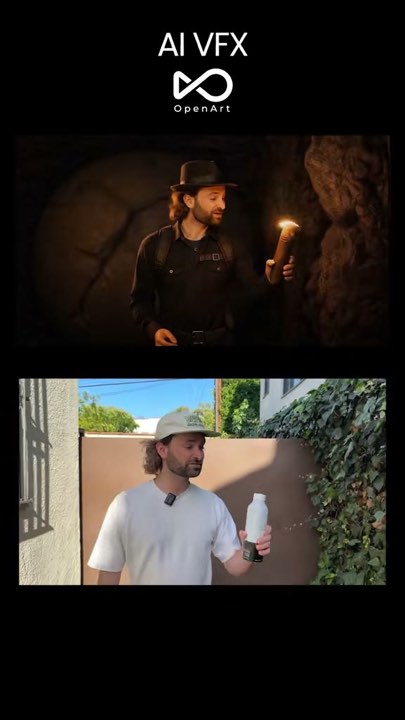
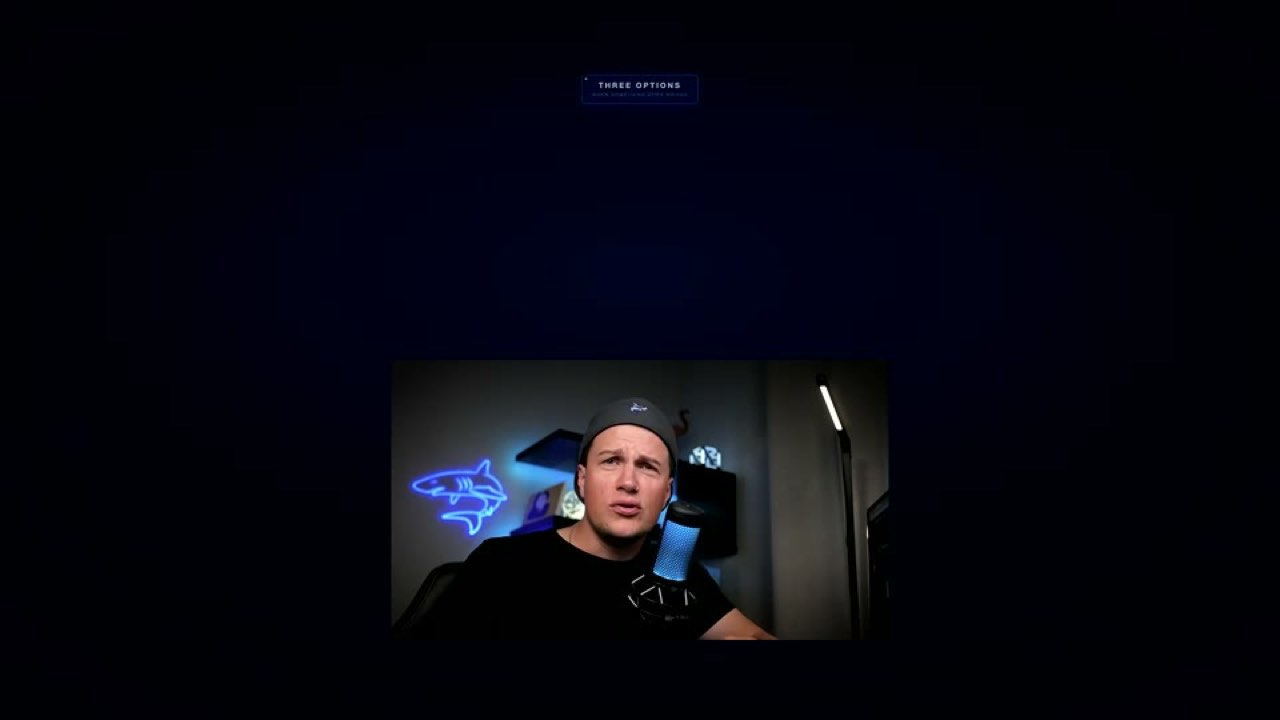
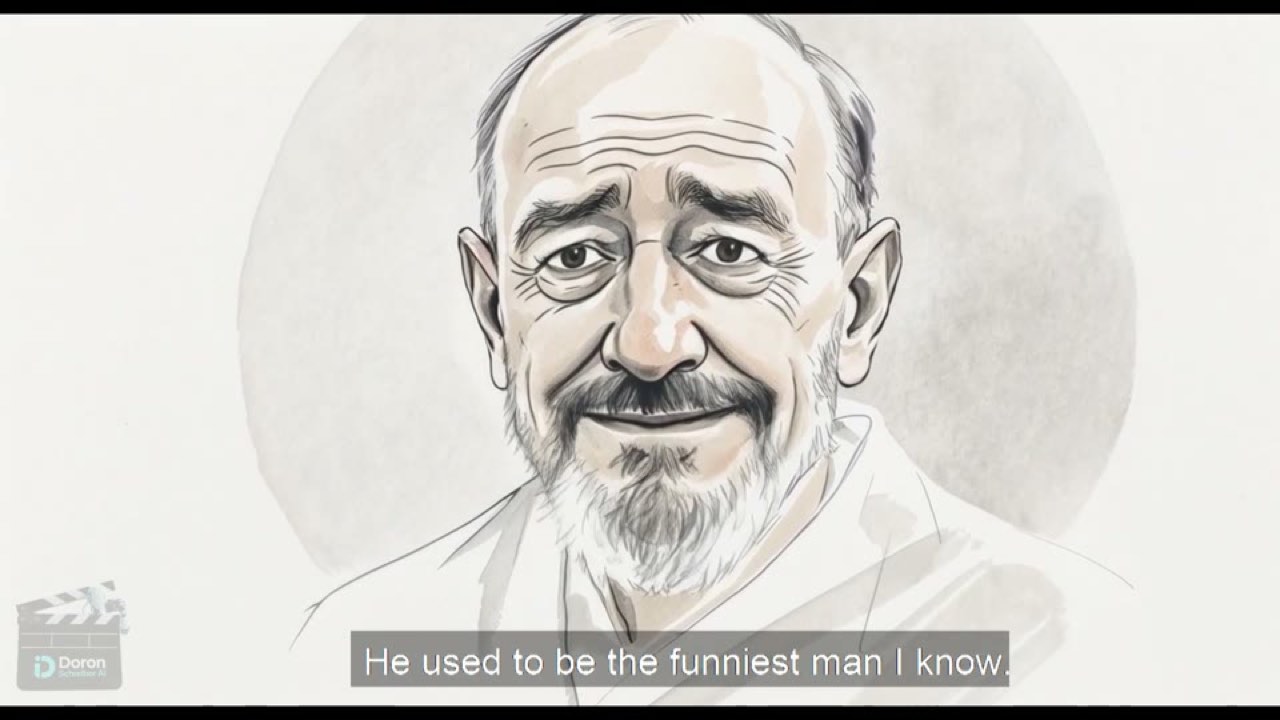
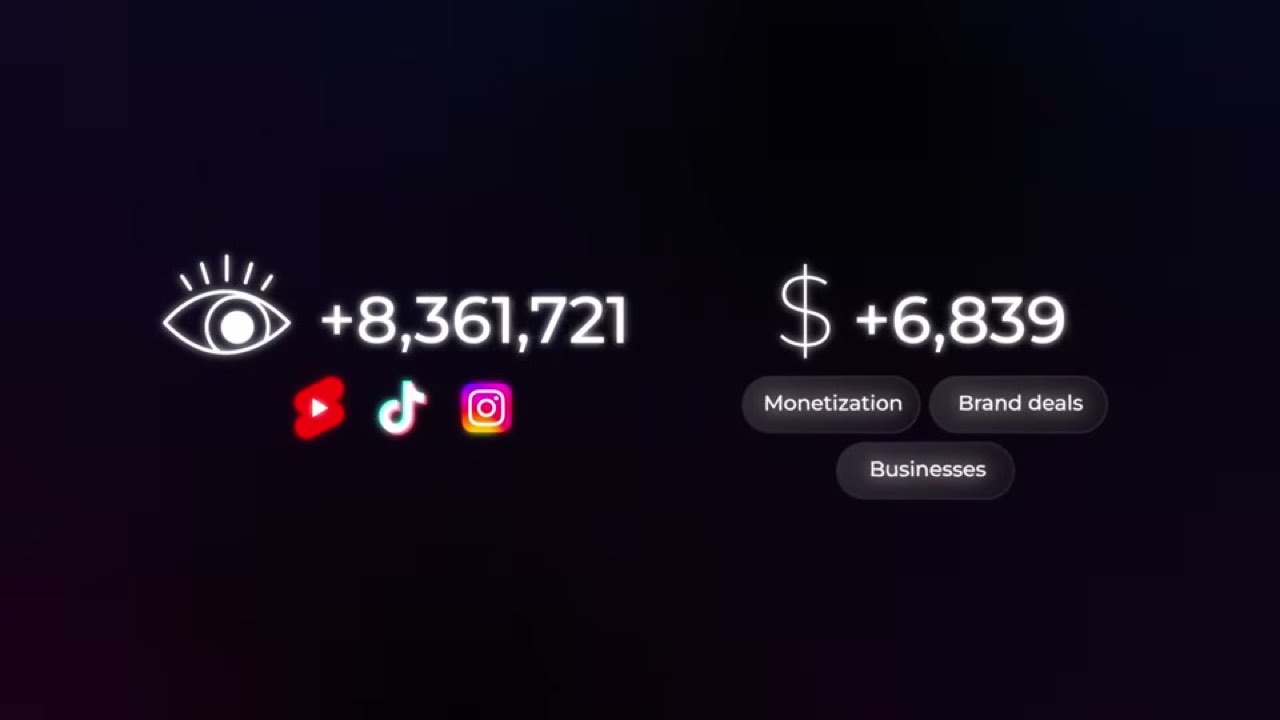
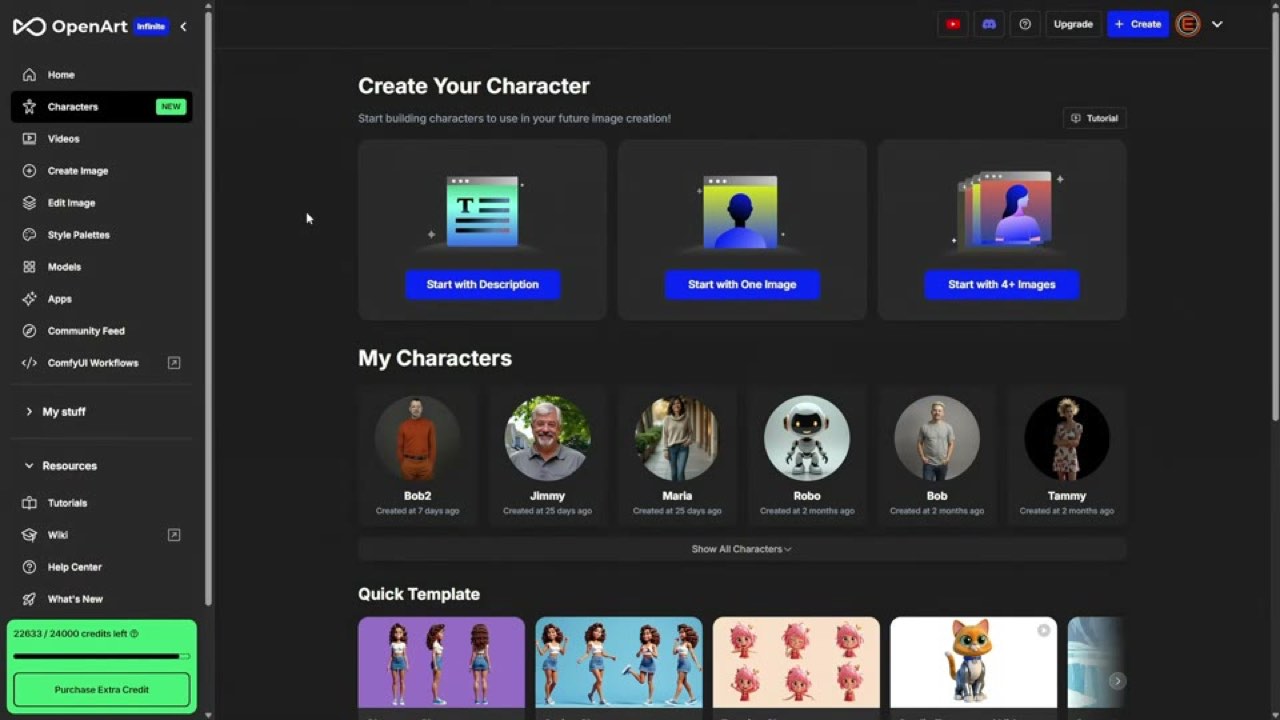
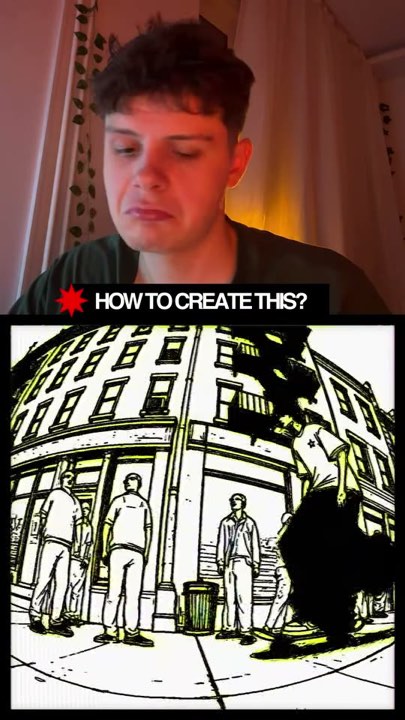
Look at the first frames. The tutorial opens on “AI VFX” and the OpenArt logo. The contest film opens on a pencil sketch of an old man and the caption “He used to be the funniest man I know.” The faceless-channel course opens on a counter reading “+8,361,721 views” next to “$+6,839.” Nothing about these three suggests the same product. That is the design: each line gets a different viewer, a different promise, and a different ask, and no creator is asked to do two of them in one video.
How the word got planted
The first wave is explanation. On July 3, Kate Telek, a smartphone-videography account with 649K followers and no disclosed relationship, opens with the definition.
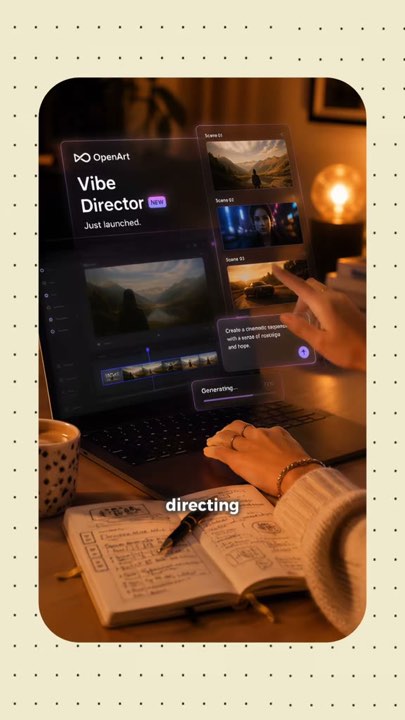
“there’s a new category in AI video called vibe directing, think vibe coding, but for videos.”0:00
On July 22, Andrew Zadonsky, a creative director with a disclosed #openartpartner tag, credits the source on camera. His post is the anchor of the run, and its five steps are the cleanest version of the script.
0:00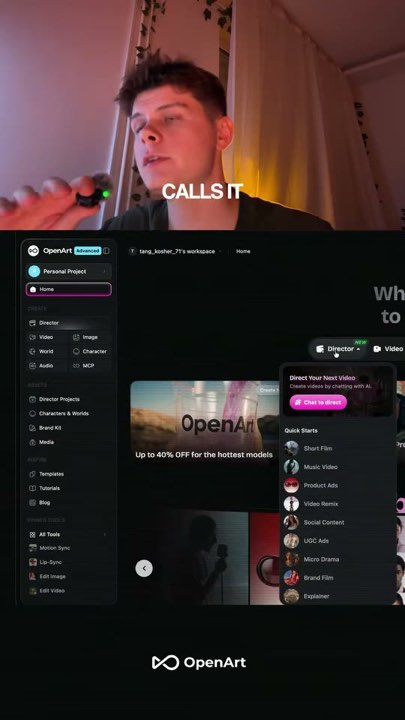 0:07
0:07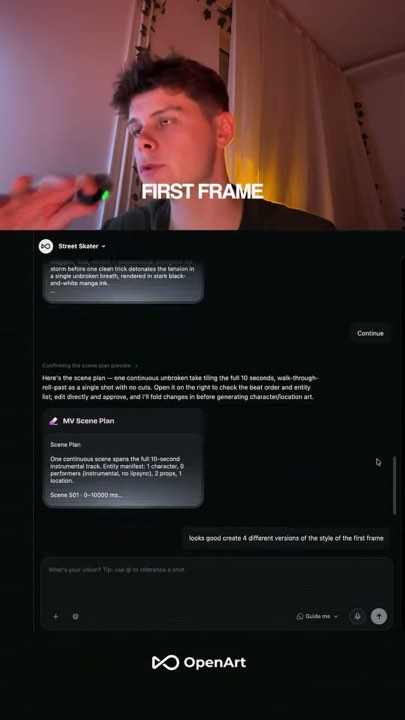 0:11
0:11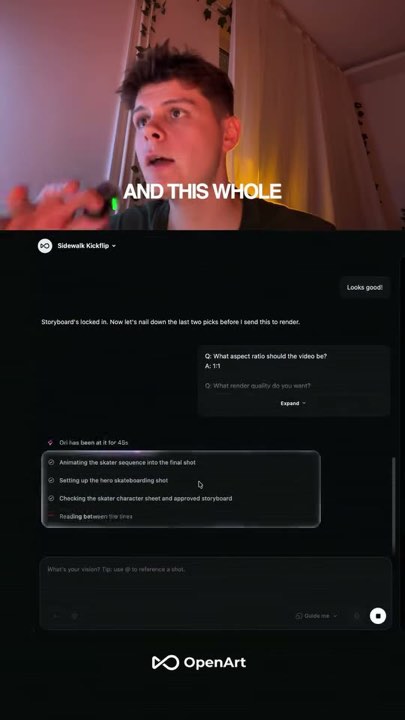 0:22
0:22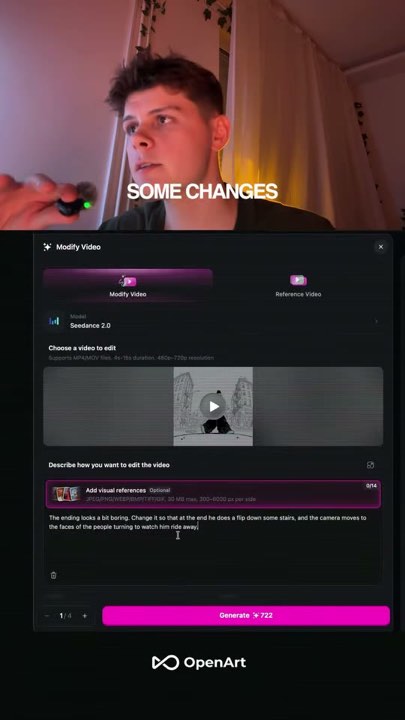 0:37
0:37Between them, on July 15, filmmaker Josh Glavin turns one photo into a five-minute film and lands the category’s known failure as the payoff: “the thing that really blew my mind was the character consistency across the whole five minutes. Everything from wide shots to close-ups, it never broke. Something that most models struggle with” (0:49). Three creators, three weeks, three different jobs: define the word, credit the brand for it, prove the promise. None of them read the same script.
The second wave is repetition. On August 17 alone, five TikTok accounts whose recent feeds are almost entirely OpenArt each published a video that says the word. ugcnatee: “It’s gonna vibe direct you a professional walkthrough of the course up to five minutes long” (0:18). eddielikesai: “It’ll vibe direct you a walkthrough video like this one” (0:22). Same verb, same feature, same “up to five minutes.”
Did the word take? We can’t see search volume or comment sections, so adoption is unmeasured. What is measured: the most-viewed post that says it is a YouTube tutorial by Tech Vorld at 98K, exactly 1.0× that channel’s normal. The word travelled. The views did not travel with it.
On YouTube, the winners show everything
The biggest one, Shark Numbers at 1.36 million views, has a structure you can copy in four beats. Play it, then read the beats against the frames.
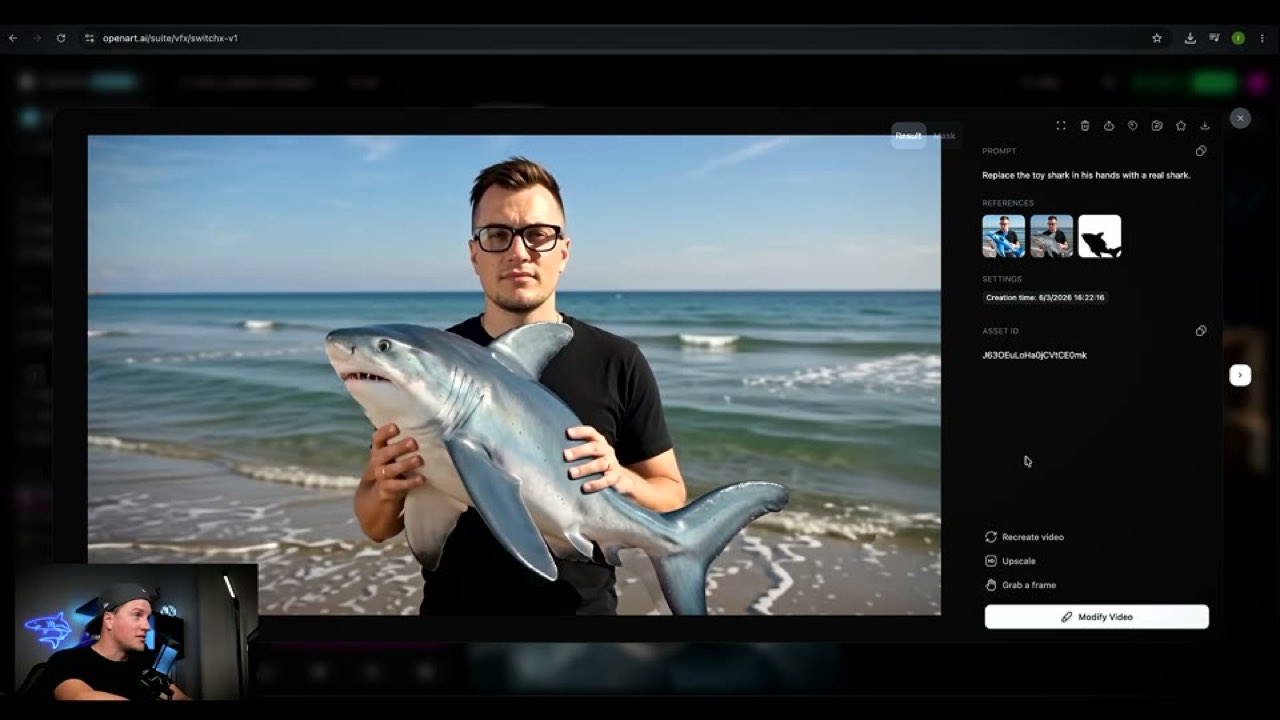
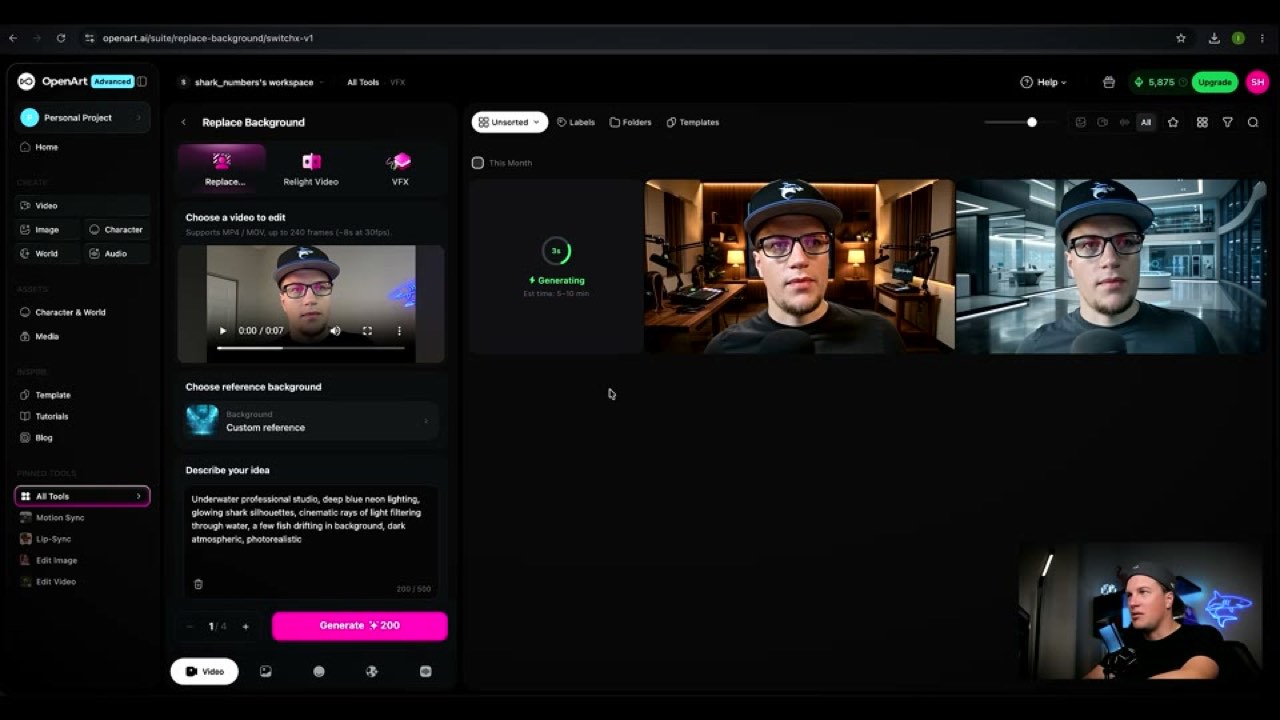 BEAT 1 OF 4
Now the same top three, measured against each creator’s own baseline instead of raw views. Raw views make them look like stronger and weaker versions of the same thing. The multiple shows three different purchases.
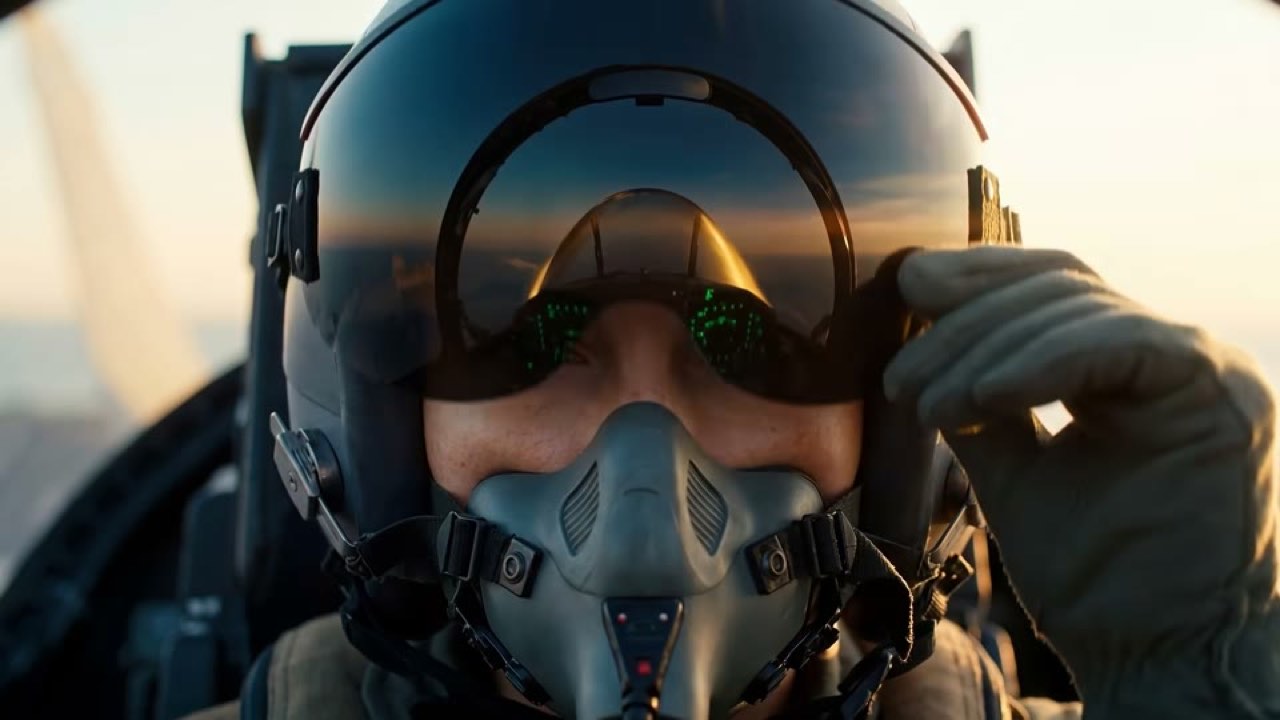
Paid posts in this sample land at a median of 1.08× the creator’s baseline, which is what buying reach looks like: you get the channel’s normal audience, not a hit. Affiliate posts sit at 2.05×, and 13 of the 63 with a baseline beat 10×, so that layer is where the brand’s breakouts actually come from. The contest films sit at the other end: ten entries, median 196 views, zero calls to action, product credited only in the description. OpenArt is not buying reach there. It is buying a portfolio it can show.
The cluster that got the word but not the views
Ten TikTok accounts in this sample devote all of their last 30 posts to OpenArt. Two carry a program tag; the other eight have no public relationship on record. We do not claim OpenArt runs them, and nothing public says so. What we can see is what they post.
On August 4, ksdealz.ugc published a script: screenshot a local golf course, feed it to OpenArt Director, “vibe direct” a flyover video, sell it to the course for $1,000. It did 77,500 views on an account with 4,345 followers. Then the script was copied.
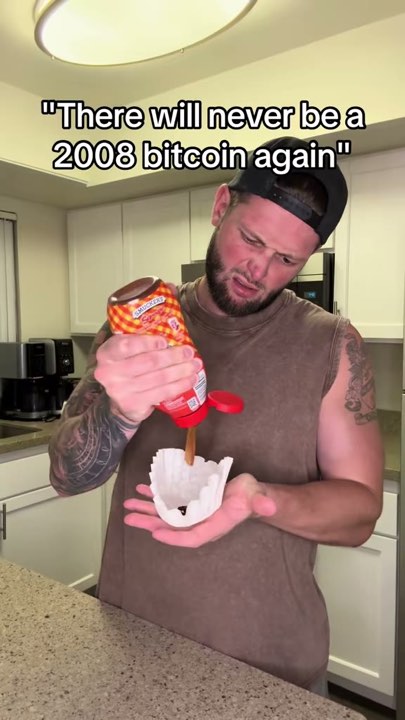
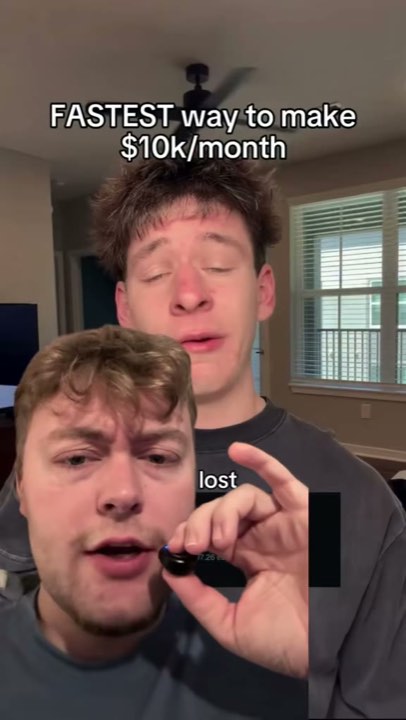
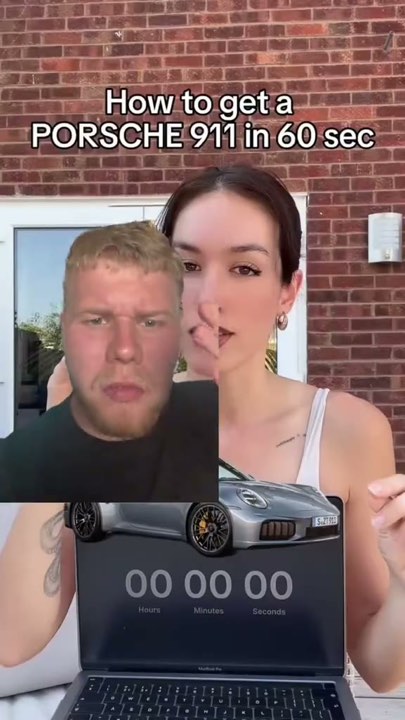
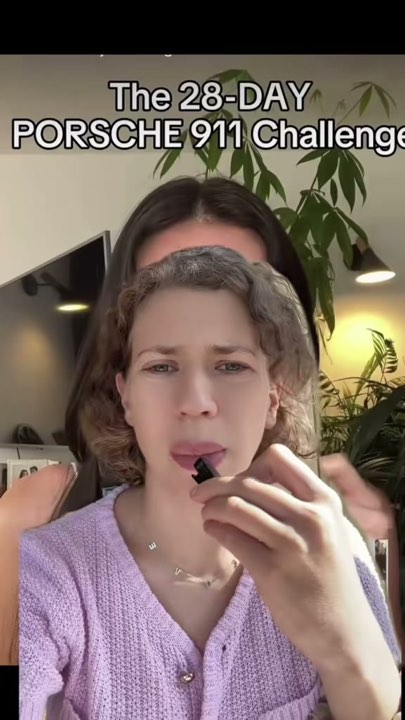
The copies share more than the pitch. Savanna Vaden and MadeByKbb open on the same stock clip. eddielikesai and rikki open with the same duet layout and the same first line over a Porsche 911 challenge. Three of them close on the same sentence, in slightly different words: eddielikesai, “After doing this for a month, I have no clue why nobody else is talking about this” (0:33); rikki, “Doing it last month, I don’t know why no one is talking about it” (0:26).
Five copies of a 77K script produced 2,197 views between them. Program-tagged posts in this sample have a median of 493 views. This is the floor of the seeding machine: the language spreads on schedule, the views do not. Every account is a separate lottery ticket, and the ticket that hit was the first one.
Our library is a winners’ sample. We cannot see the brand-hiding films nobody watched, or the tutorials that never ranked. Judge a play by the batch, not the post.
Three lines for your next brief
If your product makes something people would watch on its own, here is what OpenArt’s sample supports.
One brief per line: learn, compare, watch, earn, fix the known failure. Never ask one creator to do two lines in one video.
Workspace name, credit balance, price per generation, the creator’s own footage as the test. Then measure the post against that channel’s baseline. 1.0× is what you paid for; 10× is luck you should study, not budget for.
Definition, attribution, proof. The recitation layer comes last, and expect it to do hundreds of views, not thousands.
If you are starting from zero: the four tiers OpenArt runs, in the order to build them
OpenArt asks Creative Partners for no posting quota: “There are no strict rules — we're here to support your wildest content ideas.” OpenArt offers them “Free credits to OpenArt,” “Pre-launch access of new features,” “Spotlight on social media and websites,” “Priority paid collaboration opportunities,” “Access to exclusive community events,” and “Pre-approval for our Affiliate Program.” The program posts in this sample reached a 493-view median, while the affiliate tier produced the breakouts above. Run the program tier as your intake for affiliates, and judge it by how many partners convert into tracked affiliates, not by the views its posts get.
64 creators here, links like openart.ai/…?ref=name in the description. Costs commission only. 13 of the 63 measurable affiliate posts beat 10× the creator’s baseline: this is where the hits came from. Build this first.
19 creators tagged #openartcpp or “Creative Partner Program.” Median 493 views. It buys a steady stream of tutorials and a portfolio, not reach. Judge it by how many partners convert into tracked affiliates, never by views.
9 creators, entries to the Wonder Studios AI Director Challenge and MiniMax Story Weeks. Median 196 views, zero calls to action. You get finished films you can show; you do not get distribution.
13 creators with #OpenArtPartner or “sponsored by.” Median 1.08× the channel’s baseline. Buy this last, and only for a channel whose existing audience is the one you want.
The brief for the format that won, ready to paste
- Open on the finished result. No intro, no logo. Under two seconds.
- State the problem in the words your trade uses, not in ours.
- Say the doubt your viewers already have, out loud, before you test.
- Test it on your own footage, in the real interface, with your own account and credit balance in frame.
- Tracking link in the description. Disclose the relationship in the first minute.
- We will read this post against your channel’s median views, not raw views. 1× is fine. We are buying your audience, not a lottery ticket.
If your product’s output can’t be filmed, none of this transfers. Your problem is what to show instead, and that is a different piece.
The word is the cheapest thing a brand can distribute. It is also the only thing in this sample that spread on its own.
Sources & methodology
We studied 250 public creator posts connected to OpenArt. They show six distinct creator lines, a coordinated vocabulary, and a dedicated-account cluster. Public posts cannot tell us how many customers OpenArt acquired from any of it.
Reference videos
- 01Shark Numbers · OpenArt VFX reviewYouTube ↗
- 02Roboverse · cartoon videos with AIYouTube ↗
- 03FILM CRUX · 13 VFX tipsYouTube ↗
- 04Kate Telek · defines “vibe directing”TikTok ↗
- 05Andrew Zadonsky · credits OpenArt for the wordInstagram ↗
- 06Doron AI Studios · contest filmYouTube ↗
- 07ksdealz.ugc · the golf-course originalTikTok ↗
- 08ugcnatee · the August 17 copyTikTok ↗
Viral Anatomy evidence
- 01OpenArt brand playbook250 posts ↗
- 02Run · Tutorial → DM funnel9 posts ↗
- 03Run · “Vibe directing”, a seeded category word3 posts ↗
- 04Run · YouTube workflow → affiliate offer8 posts ↗
- 05Run · Contest portfolio pool13 posts ↗
- 06Run · Faceless animation channel factory5 posts ↗
- 07Run · One character, every scene6 posts ↗
- 08Video evidence · Shark Numbers1.36× ↗